Sleep technology
Why the best noise cancelling in the world still lets a snore through
Cancellation is tuned for steady, low frequency sound. A snore is neither. Here is what the physics allows at 2am, and what it does not.
At 2am the problem is almost never that you bought the wrong headphones. People arrive at this question owning very good ones. They put them on, the room goes quiet in a promising sort of way, and then a snore arrives anyway, right through the middle of it.
The instinct is to blame the product, or your own ears. Neither is the culprit. Noise cancellation is a specific piece of engineering built for a specific kind of sound, and the sound coming from the other side of the bed is close to the opposite of it.
What follows is not a teardown of noise cancelling headphones. They are remarkable at the job they were designed for. It is a look at why that job and your bedroom are two different problems, and what has to change in the hardware before the second one gets solved.
Part oneCancellation is a prediction, and a snore refuses to be predicted
Active noise cancellation works by listening and then arguing. Microphones pick up the sound around you, the headphones work out what that wave is doing, and they emit its exact opposite so the two collapse into something much quieter.
That trick has one requirement: the sound has to be predictable. To generate the opposite of a wave, you have to know what the wave is about to do. Ozlo describes the sweet spot plainly on its own blog, which is a slightly unusual thing for a company selling sleep earbuds to publish:
This process works exceptionally well for consistent, low-frequency noises, like the hum of an airplane engine or the whir of an air conditioner. Ozlo, Do Noise-Cancelling Headphones Work Against Snoring?
An engine at cruise is the ideal customer for this technology. It is loud, it is low, and it is doing the same thing this second that it did last second. The headphones can stay a step ahead of it all flight.
A snore is not that. In Ozlo's own description it varies in pitch, intensity and rhythm, and a single night contains low rumbles, mid range snores, and high pitched snorts and gasps. Every one of those changes is a new prediction the headphones have to make from scratch, and the same page admits what happens next: the higher pitched, irregular sounds slip through, because cancellation cannot adapt quickly enough to sudden changes.
The part of the range where it stops working
Ozlo publishes the breakdown, and it is worth reading slowly because it explains almost everything about why a good pair of headphones can feel like a partial success.
Snoring, band by band
| Frequency | What it sounds like | What cancellation does |
|---|---|---|
| Below 250 Hz | The deep rumble | Cancelled efficiently by many premium headphones |
| 500 to 1,000 Hz | The sharper, harsher part | Partly reduced, and may still be audible during irregular bursts |
| Above 1,000 Hz | Snorts, gasps, whistles | Outside the range cancellation is built for |
Ranges and outcomes as published by Ozlo. Snoring overall is given as roughly 100 to 1,000 hertz, with some components extending higher.
Read that middle row again. It is the row that ruins the night. The deep rumble goes away, which is exactly why the first ten minutes feel like a win, and then the harsh, uneven part of the snore stays in the room with you and keeps arriving at random.
Part twoSome of it never goes through your ears at all
There is a second limit, and this one no amount of engineering will move. Loud snoring, Ozlo notes, reaches 70 to 90 decibels. At that level sound stops being purely an ear problem.
Sound at that volume travels through your skull and jaw as vibration, arriving at the inner ear without ever passing the seal of an earcup. Ozlo states the consequence without hedging: no matter how advanced the headphones, they cannot prevent this form of sound transmission.
Which reframes the whole question. If a portion of a loud snore is guaranteed to reach you regardless, then chasing silence is chasing something that is not on the menu. The useful goal is different: make what arrives stop being an event.
Part threeThe second problem is furniture
Set the physics aside for a moment, because there is a plainer failure happening in parallel.
The headphones that block sound best are over ear models. The large cushion around the ear does real passive work, sealing out the mid and high frequencies that cancellation struggles with. They are, on paper, the right tool.
You cannot sleep on one. Roll onto your side and the cup presses into your ear, your jaw and the pillow all at once. Ozlo's article reaches the same conclusion and offers the standard workaround for side sleepers: a specialised pillow with a cutout, so the headphones have somewhere to go.
When the recommended fix is to buy a different pillow, the hardware is the wrong shape for the room it is being used in.
The alternative is in ear. Comfortable enough to lie on, far more discreet, and, as the same article concedes, less effective at sealing than an over ear cup. So the choice on offer has been: the thing that blocks more and cannot be slept in, or the thing you can sleep in that blocks less.
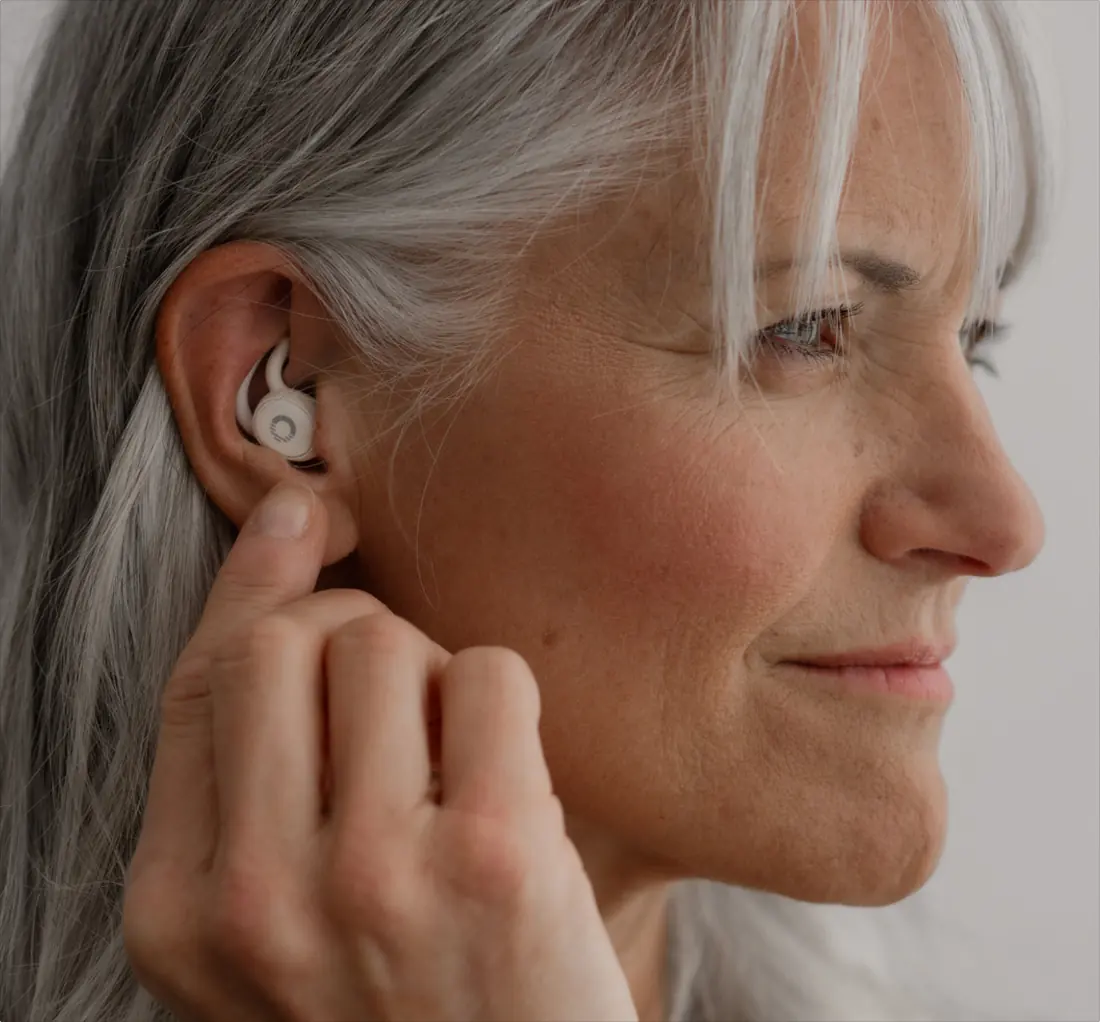
That trade off is the actual reason this category exists. Not sound quality. Geometry.
Part fourMasking is the other answer, and it is the one this category settled on
If you cannot delete the snore, and you cannot always keep it out, there is one move left: change what it is competing against.
A snore in a silent bedroom is a spike against nothing. That contrast is what pulls you up out of sleep. Put a steady, gentle sound in the room and the spike has less to stand out against. The snore is not removed. It stops being a surprise.
This is masking, and it is what Ozlo built its product around. The company is unusually direct about the choice in its Sleepbuds 2 announcement:
They use noise masking technology, not active noise cancellation, to help reduce disruptions such as snoring, city noise, and other nighttime disturbances. Ozlo press release, Ozlo Launches Sleepbuds 2, July 2026
Customers arriving from noise cancelling headphones tend to notice the difference before anyone explains it to them. One of them, writing a review on Ozlo's own product page, described the adjustment better than a spec sheet could:
I have several pairs of earbuds from Apple, Bose, and Soundcore. All are very good but not for sleeping. These are by far the best. It took me a bit to get used to them as they are not noise canceling but rather noise masking. I would recommend sticking with them if you're also used to noise cancellation as they do indeed block out snoring. It is key to use the correct size silicone tips. I'm a side sleeper and find them very comfortable.
Nicole D., verified review, ozlosleep.com
What has to change once you design for the night instead
Choosing masking settles the acoustics. It does not settle the object. An earbud that has to stay in your ear for eight hours while your head presses it into a pillow is a different engineering problem from an earbud built for a commute, and almost every specification moves.
Two of those deserve a note, because they are the ones people write to Ozlo about. The battery figure carries a real footnote: 14 hours is measured with streaming audio and sleep sounds at half volume, and drops with different content, higher volumes and an older battery. And the sound library sitting on the buds themselves matters more than it sounds, because it means the thing keeps working when the phone does not.
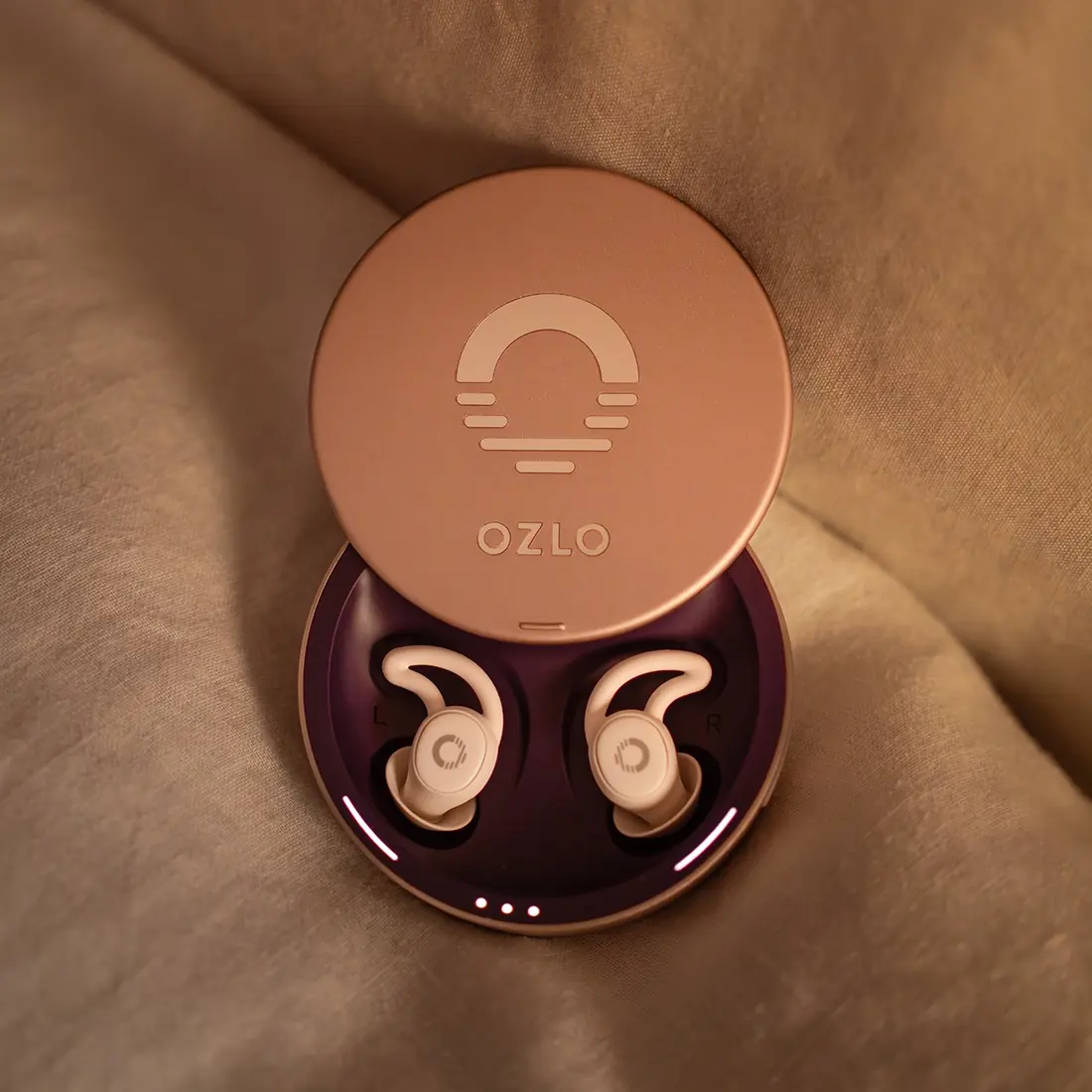
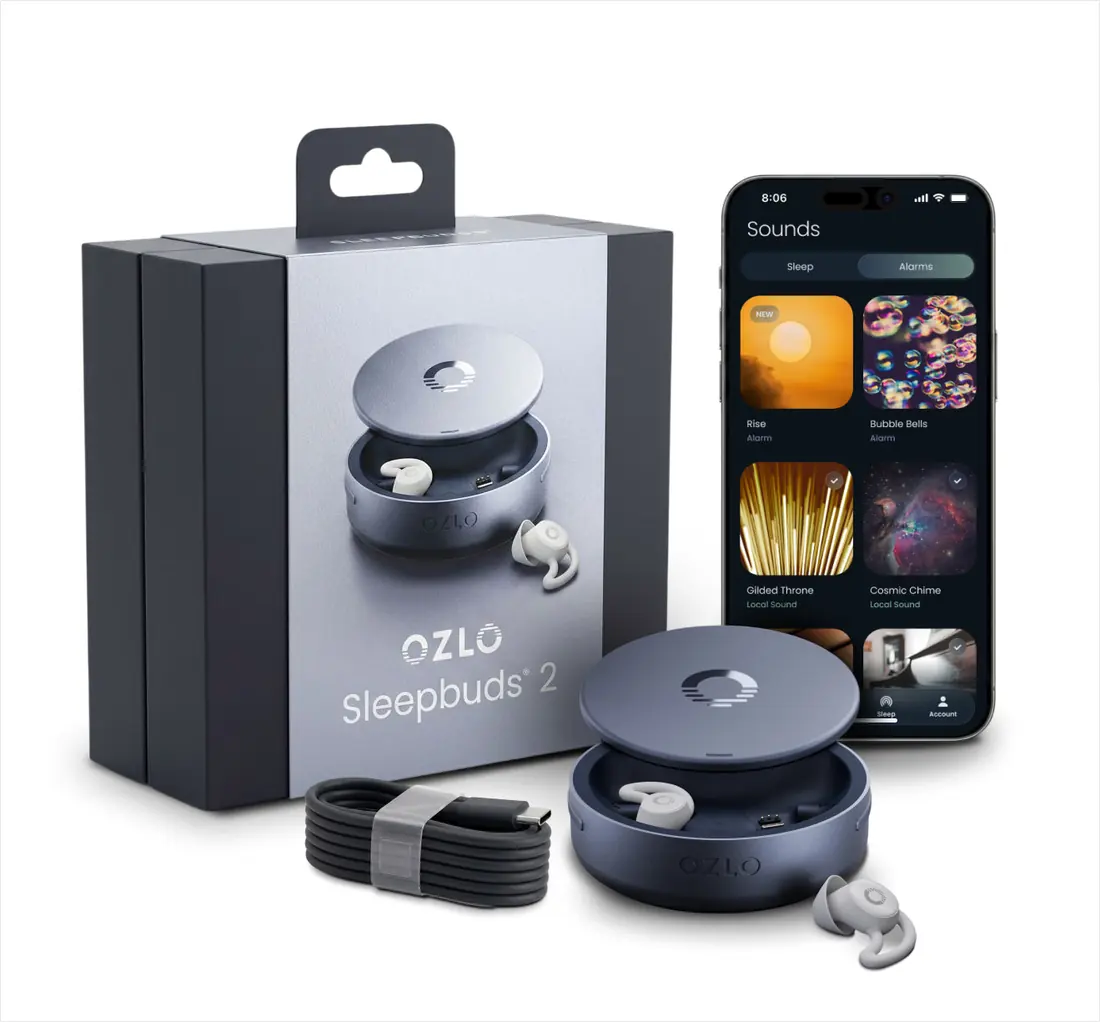
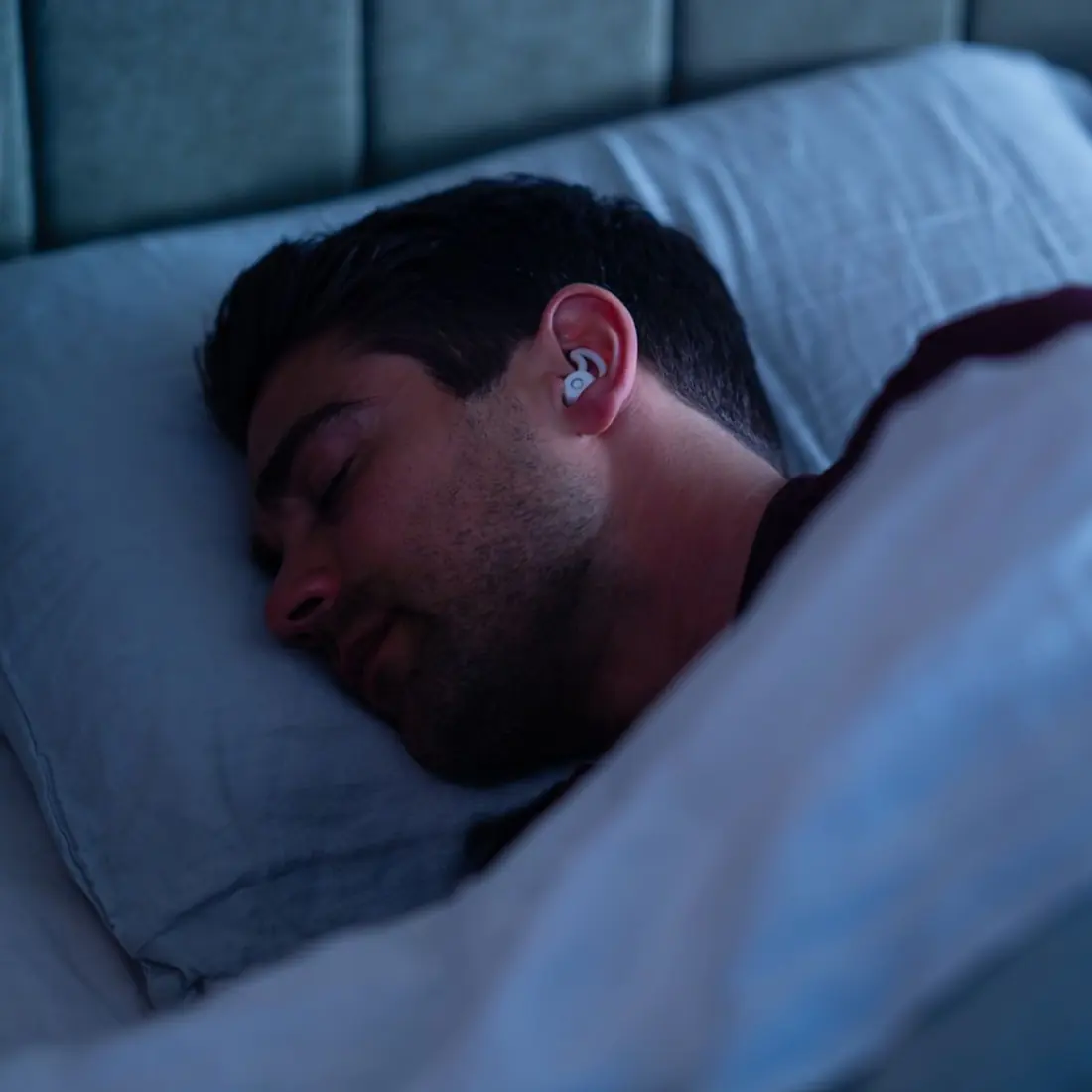
The physical claim is the one the whole category lives or dies on, and Ozlo's is specific: it calls Sleepbuds 2 the world's smallest earbuds designed just for sleep, built with low profile silicone tips and secure fit wings so they stay put when you turn over.
See the Sleepbuds 2 specificationsGoes to ozlosleep.com. Sleepbuds 2 start at $279.
Part sixThe people who built this already did it once, and watched it get switched off
There is a reason this particular company arrived at masking rather than cancellation, and it is not a marketing position. They tried it before, at a much bigger company.
Ozlo was founded in 2022 by three former Bose engineers. Not engineers who happened to work at Bose: the people who led the Bose Sleepbuds programme. When Bose stopped selling the product, the team licensed the Sleepbuds research and intellectual property and left to continue it, as reported at the time by Fast Company, TechCrunch and New Atlas. The company now holds 109 awarded patents across sleep and audio.
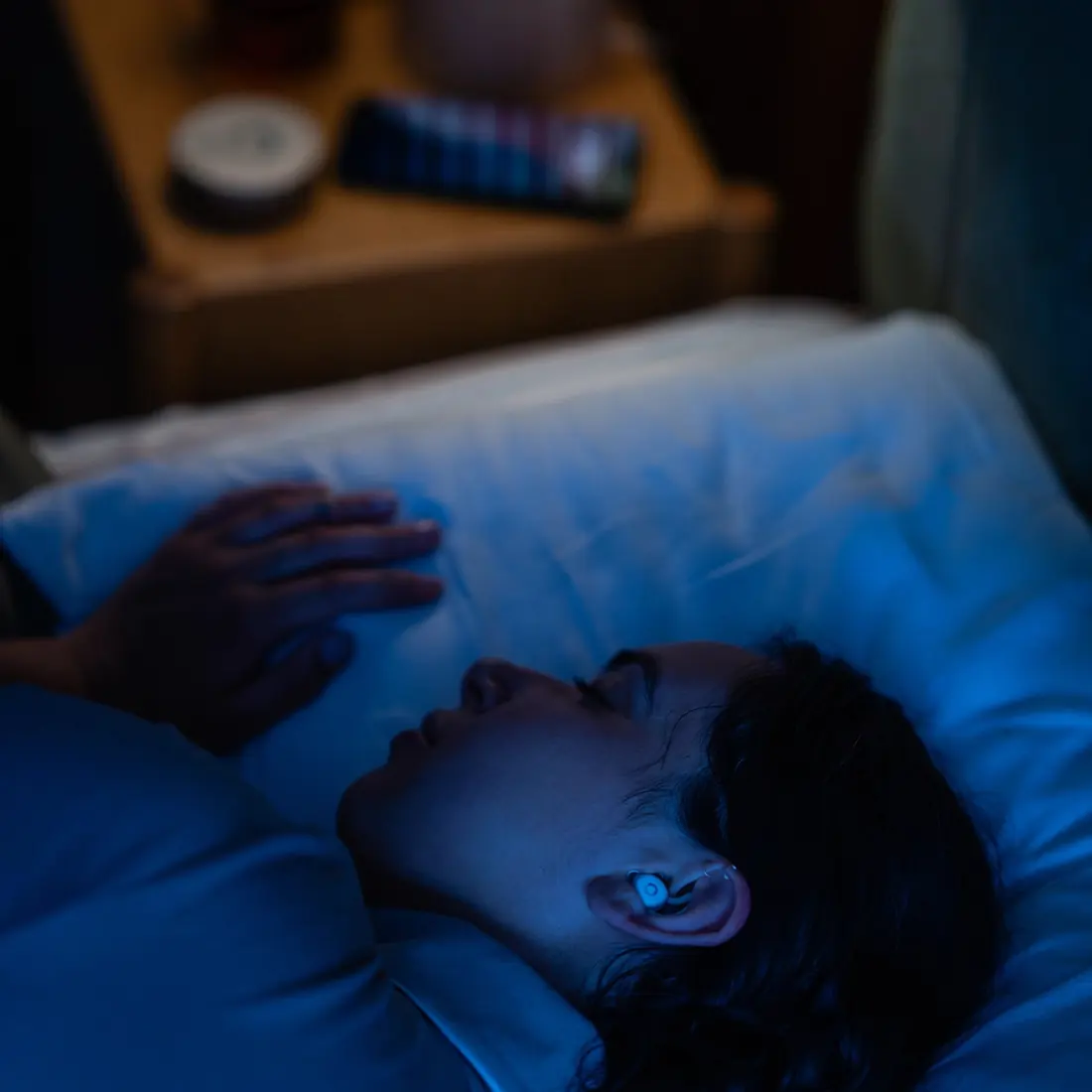
One product, two companies
Founding year, licensing and launch date as published by Ozlo and reported by Fast Company, TechCrunch and New Atlas.
That history explains what Sleepbuds 2 chose to fix. The complaints about the original were rarely about the idea. They were about battery life running out before morning and about connection reliability, and those are precisely the two headline changes in this generation, alongside a redesigned audio system with a built in amplifier for stronger masking.
We listened carefully to what people loved about the original Sleepbuds and where they wanted us to improve. N.B. Patil, co-founder and chief executive of Ozlo, in the Sleepbuds 2 announcement
You can watch that lineage arrive in the reviews. A striking number of them open the same way, with someone who owned the Bose version and had given up on ever replacing it.
I searched for so long to find something that would help me sleep through the night. I thought bose sleep buds were the answer but there was no way a discontinued product and app w/o support was going to be sustainable. Then my mom found Ozlo! Exactly like my old sleepbuds but somehow even better! They might seem expensive to some but I have no idea what I'd do without these things. Can't recommend enough
Grace H., verified review, ozlosleep.com
I am a former Bose Sleepbud wearer and needed a replacement. I tried foam earplugs but they either didn't work as well or just weren't comfortable to wear all night. So I decided to give the Ozlo Sleepbuds a try seeing they were a new and improved version of the Bose. My wife snores and these work great to mask that and are comfortable for the entire night.
John M., verified review, ozlosleep.com
Who this actually solves a problem for
The reviews sort themselves into a small number of situations, and they are worth naming, because if none of them is yours this is an expensive way to buy a sound machine.
I bought the Ozlo's to help keep the outside noise outside. I am in a hotel room 4 nights a week and an constantly battling neighbors and outside noise. The sheep buds are amazing at keeping things out. A great example was the other day I woke up and took the buds out and immediately heard a dog barking in the room next door. I was not woken up by the dog as I never heard it until I took them out. 100% constant traveler approved.
Danny Z., verified review, ozlosleep.com
I purchased these almost two years ago after lots of research on headphones for side sleepers that would block out noise. I hesitated at the price they were £289 when I brought them, but what price can you put on a good nights sleep? These have been a game changer for me. I can listen to what I want, sleep on my side with no pain in my ears through the night. I no longer have to listen to my husband snoring, the neighbours chatting or playing music loudly or traffic.
Katherine H., verified review, ozlosleep.com
I'm ex-military with severe tinnitus and really bad sleep. The Oslos are comfortable to sleep in, and it really helps to have either white noise or an audio book playing that doesn't disturb my wife's sleep. I can't go without them now.
Jesse B., verified review, ozlosleep.com
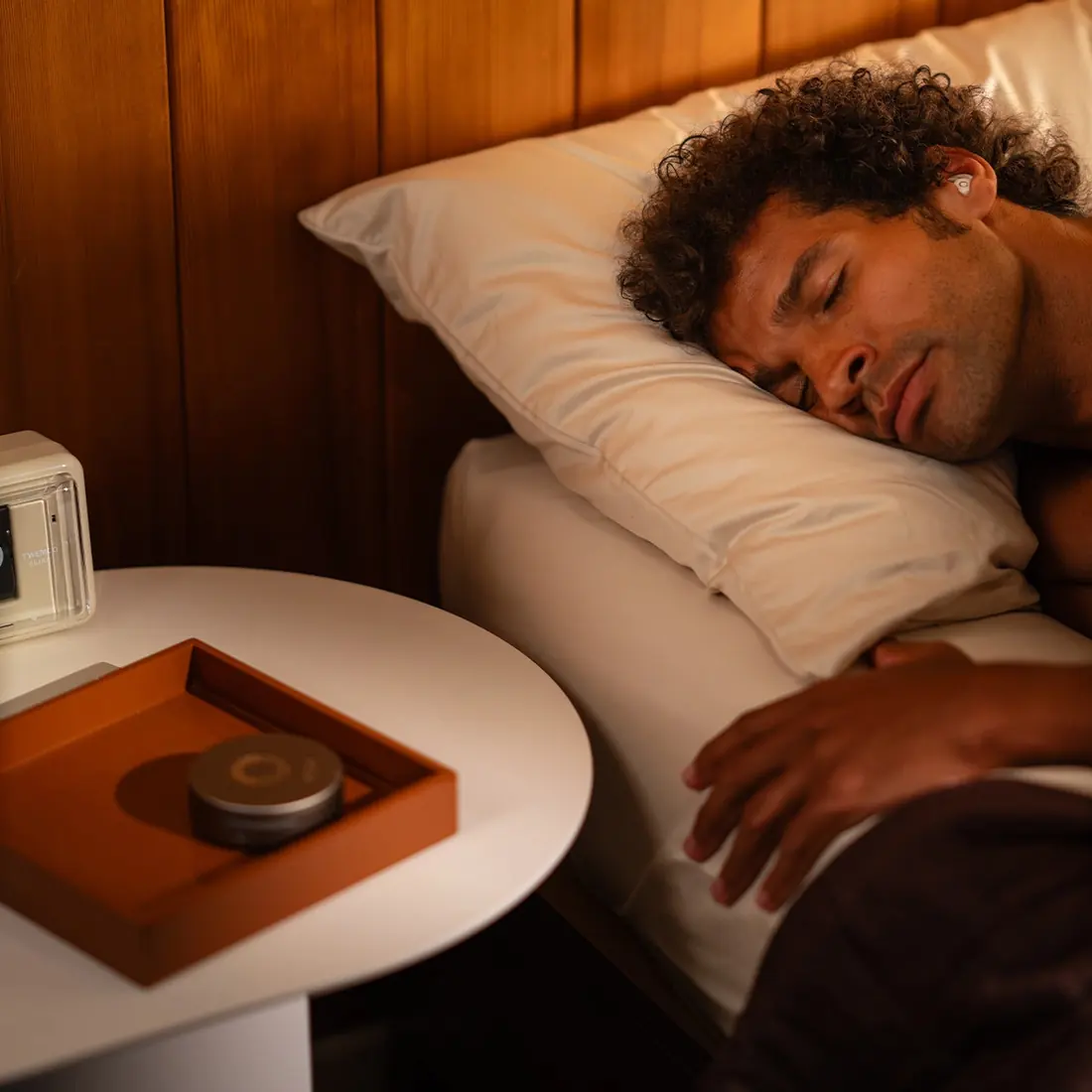
What it is not, before you spend $279
Three things are worth being straight about, because they come up in the reviews too and finding them out at midnight is worse than reading them now.
It is a sound, not silence. Masking works by putting something there. If what you actually want is nothing at all, this is the wrong tool, and some people say so plainly:
I have tried so many different types of earplugs to block out my husband's noisy snoring. Ozlo buds are the most comfortable I have found. They sit nicely in your ear and yes I am a side sleeper. My only reservation is that I need to get used to having background noise. I liked the silence of the previous buds and for these to be effective you need to listen to a beach, or fire.
Giselle S., verified review, ozlosleep.com
It does nothing for the person snoring. This is a receiver side fix. It changes your night, not theirs, and it is not a treatment for snoring or for sleep apnea. If the snoring is severe or comes with gasping and pauses, that is a conversation for a doctor rather than a purchase.
The fit is the product. Several reviews that start badly and end well have the same turning point, which is switching to a different size of silicone tip. Sleepbuds 2 ship with four pairs for that reason.
The question was never which headphones are best
Noise cancelling headphones are extraordinary at removing a steady, low, predictable sound. An aeroplane. A train. The air conditioning unit outside the window. Point them at a snore and they take away the rumble, leave the rest, and cannot do anything at all about the part arriving through the bone of your skull. Then, if you turn onto your side, you have to take them off anyway.
Sleep asked for a different object: something small enough to be lain on, comfortable enough to be forgotten for eight hours, that raises a gentle floor of sound instead of trying to out-argue an unpredictable one. That is a narrower product than a great pair of headphones. It is also, if the problem in your bedroom is the one described above, the only one that fits.
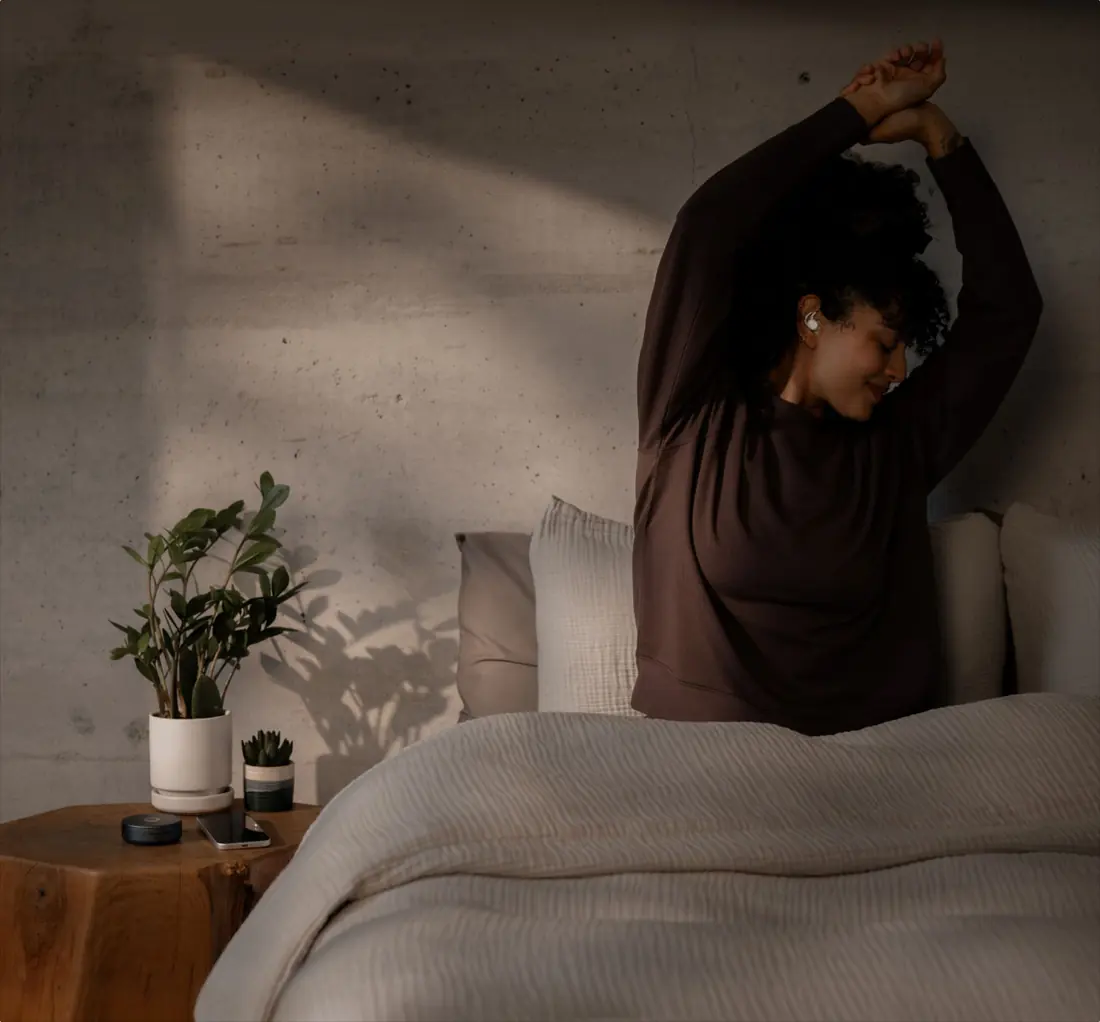
| The three routes | Blocks the snore | Can you sleep on it |
|---|---|---|
| Over ear noise cancelling | Best passive seal, but leaves the irregular and higher frequency part | No, unless you buy a cutout pillow |
| Standard in ear buds | Weaker seal, same cancellation limits | Painful for most people after 20 to 30 minutes |
| Earbuds designed for sleep | Masks rather than cancels, so irregular sound loses its contrast | Yes, that is the design constraint they start from |
Four sizes of ear tip, smart charging case and USB-C cable included. Ozlo lists them as FSA and HSA eligible.